Outdoor tick and flea burdens across Dallas County surge as ambient temperatures surpass 70 degrees Fahrenheit, creating high-risk exposure zones in shaded St. Augustine turf, ground-level cedar mulch beds, and unpaved…
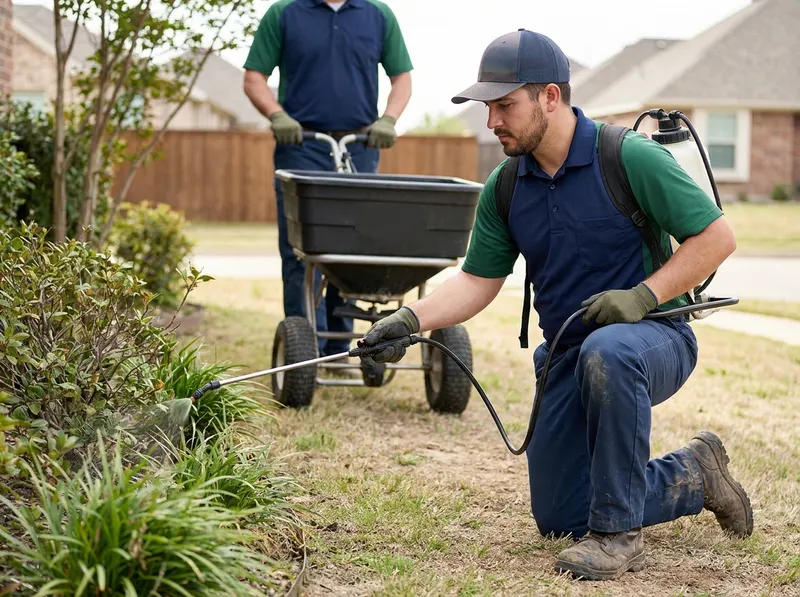
Outdoor tick and flea burdens across Dallas County surge as ambient temperatures surpass 70 degrees Fahrenheit, creating high-risk exposure zones in shaded St. Augustine turf, ground-level cedar mulch beds, and unpaved property boundaries. Homeowners in established neighborhoods such as Lakewood, Lake Highlands, and Kessler Park often face elevated vector pressures due to dense tree canopies, moisture retention along creek tributaries, and frequent traffic from urban wildlife like raccoons and feral mammals. Rather than applying broad-spectrum, blanket chemical treatments across sunny, open turf where parasites cannot survive direct ultraviolet exposure, systematic remediation relies on diagnostic boundary isolation. Technicians map specific moisture-heavy harborage points, including fence lines, dog runs, under-deck voids, and shaded ornamental shrubs, delivering microencapsulated adulticides paired with an insect growth regulator to arrest larval metamorphosis permanently.
Controlling outdoor populations requires adhering to precise agricultural and environmental safety standards. Every application executed by MeadowLock Pest Services follows integrated pest management guidelines established by the EPA Integrated Pest Management Principles, focusing material specifically where larvae feed on organic debris. Formulations incorporate targeted insect growth regulators registered under the EPA Office of Pesticide Programs, preventing immature fleas from reaching the biting adult stage while keeping drift zeroed out. In heavily wooded landscapes near the Dallas Arboretum and Botanical Garden or properties bordering White Rock Lake, wild mammals frequently reintroduce ticks into perimeter brush. Addressing these edge habitats involves physical barrier remediation aligned with the CDC Yard Tick Prevention Guidelines, creating clear gravel or cedar transition zones between manicured lawns and wild vegetative backdrops.
Treating the outdoor yard environment differs fundamentally from indoor pest remediation, requiring specialized non-systemic residues engineered to endure intense North Texas heat. Compounds must resist thermal breakdown caused by sustained 100-degree summer afternoons while maintaining water-resistant adhesion pursuant to testing benchmarks from the ASTM International Standards. To preserve beneficial native species like pollinating bees and earthworms, applications bypass flowering pollinator beds in accordance with Pollinator Partnership Conservation Standards and environmental stewardship policies managed by the Texas Parks and Wildlife Department. Properties along steep elevation grades in Oak Cliff and Bishop Arts District benefit from controlled-droplet nozzle configurations that limit environmental run-off, maintaining complete compliance with municipal surface water run-off limits overseen by the Texas Commission on Environmental Quality.
Homeowners selecting between spot-spraying retail canisters and physical remediation must balance immediate mechanical knockdown against persistent biological interruption. Over-the-counter pyrethroid hose attachments disperse diluted, uneven chemical washes that wash away after single sprinkler cycles, often driving surviving ticks higher into perimeter shrubs without neutralizing sub-soil eggs. Professional structural remediation treats the top 2 inches of thatch and detritus using precise calibration metrics verified by the Texas A&M AgriLife Extension Service. MeadowLock Pest Services calibrates active suspension rates to penetrate organic leaf litters while remaining fully pet-safe once dried, matching structural application safeguards overseen by the Texas Department of Agriculture Structural Pest Control Service and chemical handling parameters verified through the Occupational Safety and Health Administration.
Every job gets a firm, written price after a free on-site visit.
For standards, safe disposal, and service guidance on pest control services in Dallas, TX, useful references include U.S. EPA, ENERGY STAR, U.S. Dept. of Energy, Consumer.gov, U.S. Census Bureau, and Google Maps. General consumer and small-business resources are available from USA.gov, Better Business Bureau, FTC Consumer Advice, U.S. Small Business Administration, and Ready.gov.
Tell us about your flea and tick yard remediation job in Dallas and we'll send a clear, written quote, usually the same day.
 MeadowLock Pest Services