Securing reliable pest control services Dallas homeowners can depend on requires identifying entry vectors along the foundation and roofline before applying chemical or physical remediation. The structural shifting caused by North Texas expansive clay creates exterior gaps that grant subterranean termites, German cockroaches, and roof rats immediate access indoors.

Pest control services in Dallas provide biological monitoring, localized targeted applications, and physical structural exclusion to eliminate wood-destroying organisms, indoor insects, and foraging rodents from residential properties.
Every service reflects the same meticulous attention to detail, whether it's a single job or a larger pest control services project across Dallas.
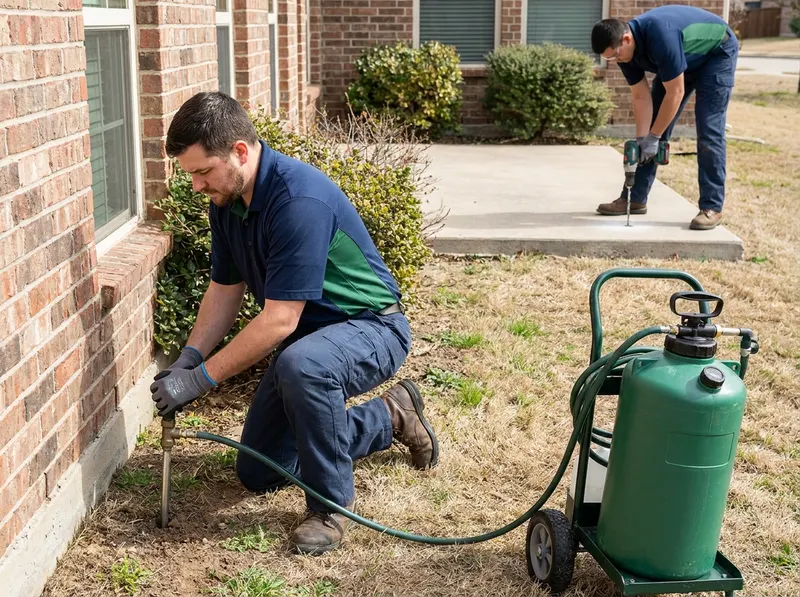
Subterranean termites, primarily Reticulitermes flavipes, establish massive underground colonies throughout Dallas County clay soils, consuming load-bearing structural timbers from the foundation sill plates upward. Treatment involves digging continuous 6-inch by 6-inch trenches directly adjacent to exterior grade beams, treating backfilled soil with non-repellent termiticides registered by the EPA , and rodding along expansion joints to form an uninterrupted protective chemical boundary. Technicians systematically inject non-repellent liquid termiticides such as fipronil or imidacloprid at a standardized rate of 4 gallons per 10 linear feet per foot of depth, saturating the subterranean substrate to eliminate passing worker termites without triggering colony avoidance behavior. Structural drilling through abutting concrete slab patios, front walkways, and garage aprons occurs at standardized 12-inch intervals to inject termiticides directly into underlying gravel beds where termites travel unseen beneath masonry. For homes bordered by dense landscape beds or complex root systems, technicians deploy low-profile subterranean bait monitoring stations every 10 to 15 linear feet around the property perimeter, utilizing insect growth regulators that suppress chitin synthesis when foraging worker termites feed and share bait matrices throughout the primary underground nest.
Get a quote →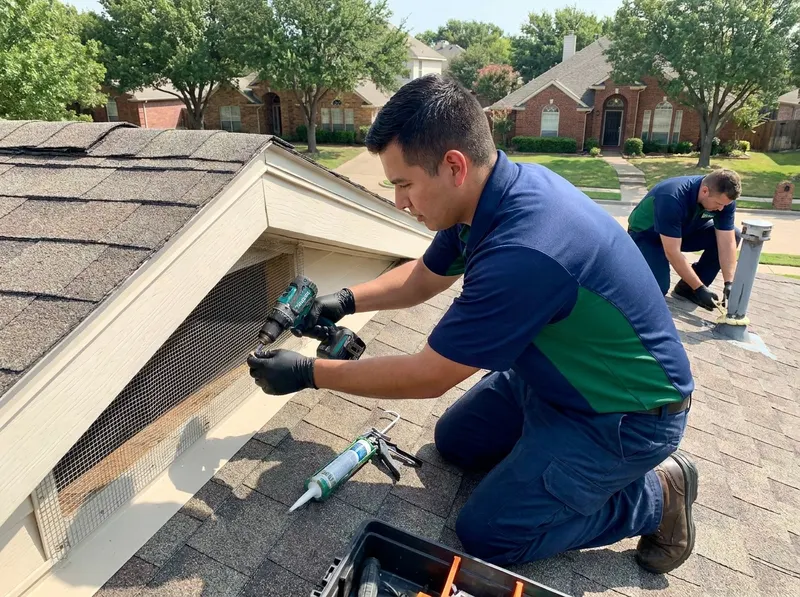
Roof rats (Rattus rattus) exploit Dallas architectural styles by traveling across overhead tree limbs, electric utility drop lines, and fence tops directly onto roof pitches. Mechanical exclusion seals entry portals exceeding one-quarter inch using 16-gauge galvanized steel hardware cloth, architectural metal flashing, and structural elastomeric sealants, adhering to standards outlined by the CDC Rodent Control guidelines. Remediation begins with a comprehensive structural audit along roof ridgelines, dormer transitions, rake edges, and HVAC line chase openings through masonry walls. Technicians mechanically fasten heavy-gauge hardware cloth over exposed gable louvers, install custom metal flashing across chewed soffit intersections, and cap off disconnected plumbing vent pipes where rats gain vertical attic access. Trapping protocols inside contaminated attic spaces run concurrently with exterior exclusion, utilizing heavy-duty snap traps secured along structural top plates, joists, and recognized rodent runways for a period of 10 to 14 days until zero trap activity confirms complete interior population removal. Following successful population extraction, contaminated insulation materials containing toxic droppings and urine pheromones are sanitized using EPA-registered antimicrobial biocides to neutralize allergens and prevent subsequent exterior scouting by neighborhood rodents.
Get a quote →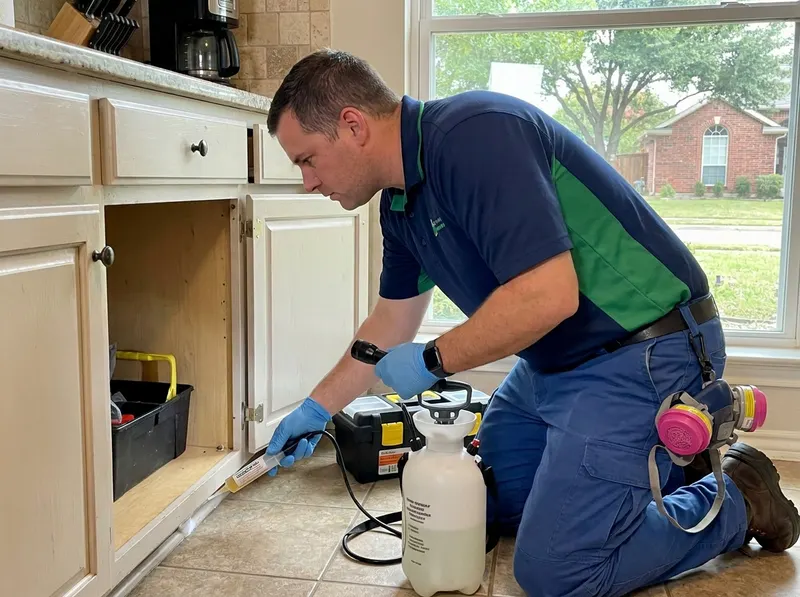
German cockroach (Blattella germanica) infestations occur inside high-humidity interior zones, especially commercial kitchens, residential galleys, and utility closets behind heat-generating condenser motors. Remediation combines targeted insect growth regulators (IGRs), precise microencapsulated non-repellent formulations, and specialized bait matrix placements directly into interior cracks and voids per the Texas A&M AgriLife Extension structural pest recommendations. Because a single gravid female carries an ootheca containing up to 48 embryonic nymphs, technicians avoid broad-spectrum repellent sprays that cause colony budding and scatter populations deeper into wall framing. Instead, technicians deploy targeted formulations containing active ingredients like dinotefuran, indoxacarb, or hydramethylnon in millimeter-sized bait placements placed precisely within cabinet hinges, dishwasher access spaces, refrigeration compressor housings, and plumbing pipe sleeves. Insect growth regulators like hydroprene or pyriproxyfen disrupt juvenile molting cycles, generating sterile adults with twisted wings and preventing subsequent generations from reaching reproductive viability. Follow-up diagnostic monitoring utilizes strategically positioned sticky insect monitors to calculate population decline rates, verify feeding patterns, and direct precise re-baiting efforts until interior trap counts drop to absolute zero.
Get a quote →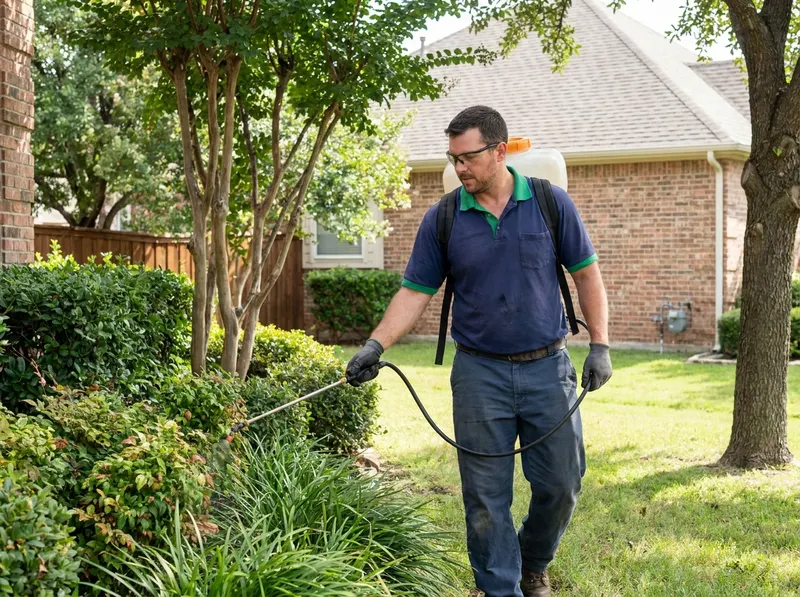
Mosquito management programs neutralize breeding and resting vectors for Culex quinquefasciatus mosquitoes, known vectors of West Nile Virus across North Texas. Monthly treatments from April through October apply fine droplet mists containing synthetic pyrethroids or essential plant oils to dense shrubbery undersides, groundcover canopies, and fence boundaries, coordinated alongside inspections aligned with the Texas Department of State Health Services surveillance data. Backpack mist-blowers atomize residual formulations down to 50-micron droplets, ensuring micro-droplets adhere electrostatically to the shaded undersides of broadleaf foliage, ivy, and ornamental landscape plants where adult female mosquitoes rest during daytime heat. Concurrently, standing water zones such as French drain basins, decorative birdbaths, low lawn depressions, and uncirculated fountain ponds receive biological larvicide treatments utilizing Bacillus thuringiensis israelensis (BTI) briquettes or liquid formulations that selectively destroy larval gut linings within 24 hours without harming beneficial aquatic organisms, household pets, or non-target wildlife. Bi-weekly or monthly application intervals establish a consistent protective shield across outdoor living zones, effectively depressing outdoor biting activity by up to 90% during peak summer transmission windows.
Get a quote →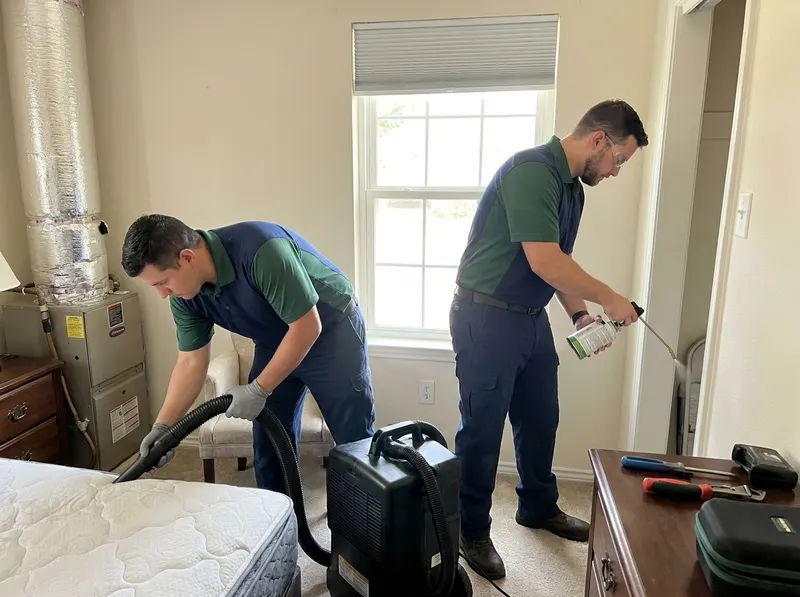
Cimex lectularius infestations demand integrated eradication protocols targeting seams, baseboard channels, electrical plate cavities, and upholstered furniture. High-temperature convective heating systems elevate target zones to 122°F (50°C) to denature all life stages, including desiccation-resistant eggs, paired with long-lasting amorphous silica dust formulations applied behind wall baseboards pursuant to Pest Control Technology technical operational guidelines. Convective thermal units circulate superheated air continuously through infested bedrooms, utilizing digital temperature sensors placed under mattress cores and inside closet depths to confirm target lethal temperatures persist for a minimum of four continuous hours. To provide structural residual defense against re-introduction, technicians treat wall voids, perimeter tack strips, and electrical outlet junction boxes with pharmaceutical-grade amorphous silica dust or microencapsulated synthetic pyrethroids and pyrroles like chlorfenapyr. This combination mechanically abrades the insect's protective waxy cuticle, leading to rapid dehydration of any stray bed bugs crawling across treated boundaries weeks after thermal treatment completion. Mattress encasements certified bed-bug-proof seal vulnerable bedding assets, transforming resting surfaces into easily inspected physical boundaries that protect interior comfort.
Get a quote →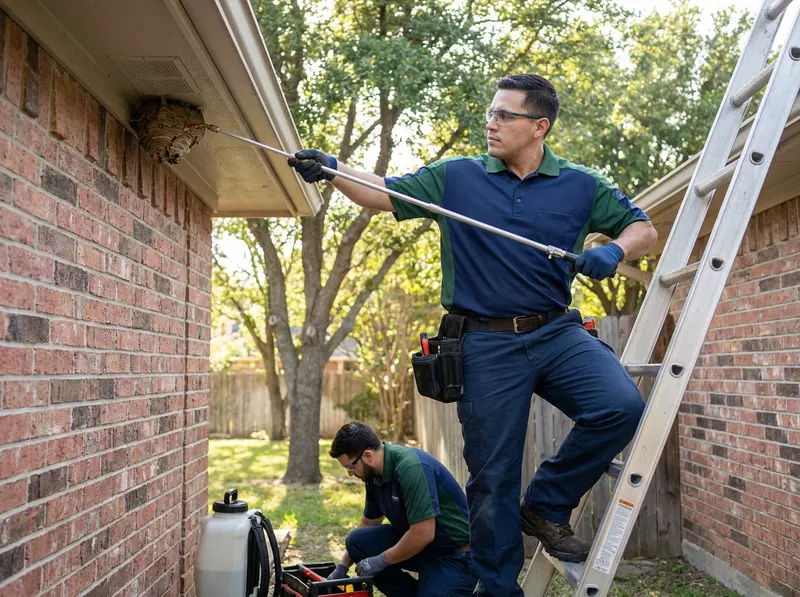
Paper wasps (Polistes metricus), yellowjackets, and baldfaced hornets construct nests under residential soffits, masonry window lintels, and second-story roof eaves, generating stinging hazards for occupants. Abatement involves targeted aerosol freezing agents and directional liquid treatments to rapidly eliminate active adults, followed by physical mechanical detachment of embryonic comb structures and repellent dusting to prevent nest re-establishment. Technicians utilize telescoping applicator poles extending up to 30 feet to deliver pressurized contact pyrethroid sprays directly into nest entrances, neutralizing defending wasps instantly to prevent defensive stinging swarms. In cases involving aggressive yellowjackets nesting within subterranean rodent burrows or brick wall weep vents, technicians inject micro-granular pyrethroid or wettable powder formulations under pressure directly into the structural cavity, neutralizing the primary queen and brood chambers beneath the surface. After adult neutralization, technicians scrape away and eliminate the physical paper nests, applying a long-lasting microencapsulated residual spray across the attachment anchor site to deter displaced foraging wasps from re-attaching new nesting cells on the same structural surfaces.
Get a quote →
Red imported fire ants (Solenopsis invicta) colonize residential lawns, electrical utility transformer boxes, and landscape turf throughout North Texas. Treatment utilizes targeted individual mound drenches using metabolic-inhibiting active ingredients alongside calibrated broadcast bait applications of abamectin or hydramethylnon, aligning with the integrated pest management principles established by the Texas Department of Agriculture . Technicians apply low-concentration bait matrices uniformly across entire turfgrass surfaces using rotary spreaders when soil temperatures exceed 65°F and foraging workers are actively harvesting lipids and proteins. The slow-acting active ingredient allows foraging worker ants to carry bait granules deep into subterranean gallery networks, distributing the toxicant through trophallaxis to the egg-laying reproductive queens and developing larvae. For critical structural hazard zones such as mounds constructed against HVAC compressors, pool pumps, and residential entry walkways, technicians perform targeted high-volume liquid drenches utilizing microencapsulated pyrethroids or spinosad, delivering one to two gallons of solution per mound to collapse subterranean tunnel networks and deliver instantaneous colony mortality.
Get a quote →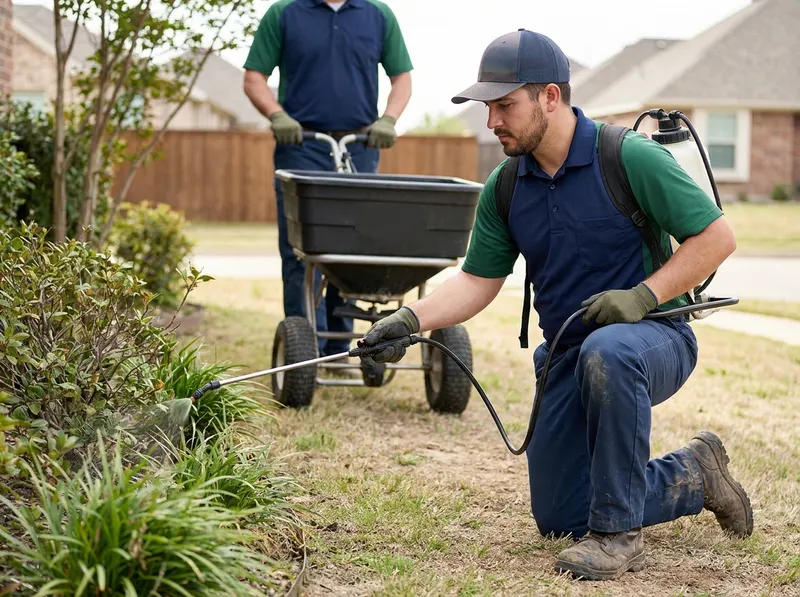
Rhipicephalus sanguineus (brown dog tick) and Ctenocephalides felis (cat flea) populations proliferate in shaded grass yards, patio deck undercrofts, and dog runs during Dallas summer months. Yard remediation combines broad-spectrum microencapsulated adulticides with outdoor insect growth regulators to interrupt larval metamorphosis, applied through hydraulic power sprayers across shaded landscape perimeters compliant with OSHA worker and environmental safety protocols. High-pressure hydraulic spray rigs apply residual adulticides directly across turf perimeters, beneath deck boards, along perimeter fence lines, and inside shaded pet resting areas where organic debris shelters flea pupae and questing ticks. Concurrently, liquid insect growth regulators like pyriproxyfen prevent juvenile flea larvae from shedding their outer skins and reaching reproductive maturity, disrupting population propagation within 14 days of initial application. For properties with active brown dog tick populations capable of infesting indoor environments, technicians conduct complementary perimeter crack-and-crevice treatments along baseboards, beneath kennel bedding, and behind furniture legs to eliminate crawling ticks before blood meals can occur.
Get a quote →You get a firm, itemized quote for your pest control services before any work begins, no surprises, no pressure.
Careful prep, tidy work, and a full cleanup when we are done. We treat your home and belongings like our own.
The same trusted, background-checked team from the first call to the final check.
Selecting the proper pest defense methodology depends entirely on structural compromise, active pest biology, and long-term property goals. If active colonies of subterranean termites threaten framing timbers, choose liquid non-repellent soil barriers or subterranean bait monitoring networks; if localized nuisance insects like American cockroaches or odorous house ants enter intermittently around perimeter openings, choose localized microencapsulated perimeter barriers and exterior weep-hole screening. The structural trade-off centers on upfront mechanical labor versus perpetual chemical reliance: surface spraying requires repeat visits every 60 to 90 days to counter UV breakdown and rainfall dilution, whereas comprehensive physical exclusion demands higher initial diagnostic labor to seal structural gaps across brick frieze boards, mortar joints, and eaves, but delivers durable prevention without continuous chemical load.
If wood-destroying drywood termites infest isolated structural rafters, localized direct-wood borate injections fit the profile without requiring whole-structure containment; however, widespread subterranean infestations require full perimeter trenching and rod treatment along foundation footings. When roof rats infiltrate attic spaces via tree canopy bridges, snap-trapping coupled with 100% mechanical roofline exclusion isolates and removes the population within 7 to 14 days, whereas broadcast anticoagulant rodenticides outside risk non-target secondary toxicity to local wildlife along urban park corridors. For perimeter crawlers such as centipedes, scorpions, and ground beetles, micro-granular barrier band treatments extending 5 to 10 feet out into surrounding turf zones establish a slow-release zone that withstands seasonal Dallas rain events far better than liquid applications alone, although granular products require mechanical dispersion equipment and calibrated delivery rates to prevent uneven deposition across hard clay soil substrates.
Property owners managing historic properties with elevated crawlspaces must weigh sub-floor ventilation and vapor barrier encapsulation against simple chemical applications, as unmitigated soil moisture beneath older floorboards continuously attracts fungal rot and wood-boring beetle species regardless of surface sprays applied inside living rooms. Homeowners dealing with pantry pests such as Indian meal moths or sawtoothed grain beetles need complete disposal of infested grain products and pheromone trapping rather than broad insecticide applications, avoiding food contact surface contamination while mechanically severing the reproductive cycle. In contrast, sudden seasonal invasions of paper wasps or bald-faced hornets nesting along exterior soffits necessitate instantaneous knockdown via pressurized freezing aerosols or high-velocity liquid agents, where physical distance and targeted application minimize personal stinging risks during the active removal phase.
Every project gets a firm, written price after a free on-site visit. Ranges below for orientation.
Tell us about your pest control services job and we'll send a clear, written quote, usually the same day. Or just call and talk to a real Dallas pro.
(469) 424-9120
The Trinity River basin and surrounding dense greenbelts create unique structural pest pressures across Dallas properties, particularly where high-water-table soils meet expansive Blackland Prairie clay. Neighborhoods surrounding White Rock Lake and the Dallas Arboretum and Botanical Garden experience persistent outdoor humidity corridors that accelerate subterranean termite foraging along foundation margins and sustain dense mosquito breeding cycles. Historic pier-and-beam foundations throughout Oak Cliff and Kessler Park offer wide crawlspace access points for roof rats and subterranean roaches, while the slab-on-grade developments in Preston Hollow and Far North Dallas frequently develop hairline stress fractures that grant subterranean pests entry beneath interior hardwood floors. Seasonal climatic shifts across Dallas County generate distinct pest migration cycles that demand specialized diagnostic approaches throughout the calendar year. In hot summer stretches when temperatures frequently surpass 100°F along the Stemmons Freeway and Central Expressway corridors, moisture-dependent insects like American cockroaches and smokybrown roaches flee dry landscape beds, navigating plumbing vent pipes and air conditioning condensate drain lines directly into residential bathrooms. Conversely, the arrival of autumn cold fronts in late October drives Norway rats and roof rats from the heavily wooded riparian zones along Turtle Creek and the Great Trinity Forest toward residential attic insulation, seeking nesting warmth above heated ceilings. Older residential masonry throughout Lakewood and the Bishop Arts District presents unsealed weep holes and porous mortar joints, allowing paper wasps and scorpions to establish harborages within exterior walls unless mechanical mesh barriers are professionally installed. Foundation shifts caused by severe drought-to-deluge cycles in North Texas repeatedly compromise underground plumbing lines, creating hidden subterranean leaks that attract Reticulitermes subterranean termites directly to structural grade beams beneath living rooms. Addressing these localized biological challenges requires understanding how Dallas microclimates interact with specific residential building architectures, ensuring treatment strategies provide true structural containment rather than temporary surface relief.
Free estimates for Dallas & the surrounding area.
For standards, safe disposal, and service guidance on pest control services in Dallas, TX, useful references include U.S. EPA, ENERGY STAR, U.S. Dept. of Energy, Consumer.gov, U.S. Census Bureau, and Google Maps. General consumer and small-business resources are available from USA.gov, Better Business Bureau, FTC Consumer Advice, U.S. Small Business Administration, and Ready.gov.
 MeadowLock Pest Services